A local guide for first visits

Top 10 Things
to Do in Cape Town

Ten places worth your time, how long each really takes, and how to fit them together. Written for visitors from the US and UK planning ahead.

Cape Town brings together mountain scenery, dramatic coastline and a layered history, with the Winelands a day trip away. First visits can feel scattered, so this guide brings ten worthwhile experiences together with practical notes on weather, timing and etiquette. These are recommendations, not a ranking or a promise to see everything in one tour.

Distances are short on the map but traffic, wind and closures shape the day, so build in flexibility. If you would rather have someone handle the sequencing and driving, Wendell plans private days for one to six guests. Ask about your dates

  1. 01

    Table Mountain

    Table Mountain rising above the Cape Town city bowl
    Where
    City Bowl
    Allow
    2 to 4 hours
    Good for
    First-timers, views, walkers

    Table Mountain is the reason Cape Town looks the way it does. The flat-topped sandstone massif rises straight behind the city, and almost every other sight on this list is easier to understand once you have seen the city from up there. The summit is an open plateau with marked paths and viewpoints over the city bowl, Robben Island and the Atlantic coast.

    You can reach the top by the rotating cableway or on foot along one of several routes. Walking is real mountain hiking: steep, exposed and not something to improvise in sandals. The cableway is weather-dependent and can pause or close in wind or cloud, so treat it as a flexible part of the plan.

    Practical tip. Check conditions on the morning itself, carry a windproof layer even on a warm day, and keep a second day free if the top is clouded in. A clear late afternoon often rewards patience.
  2. 02

    Cape Point and the Cape of Good Hope

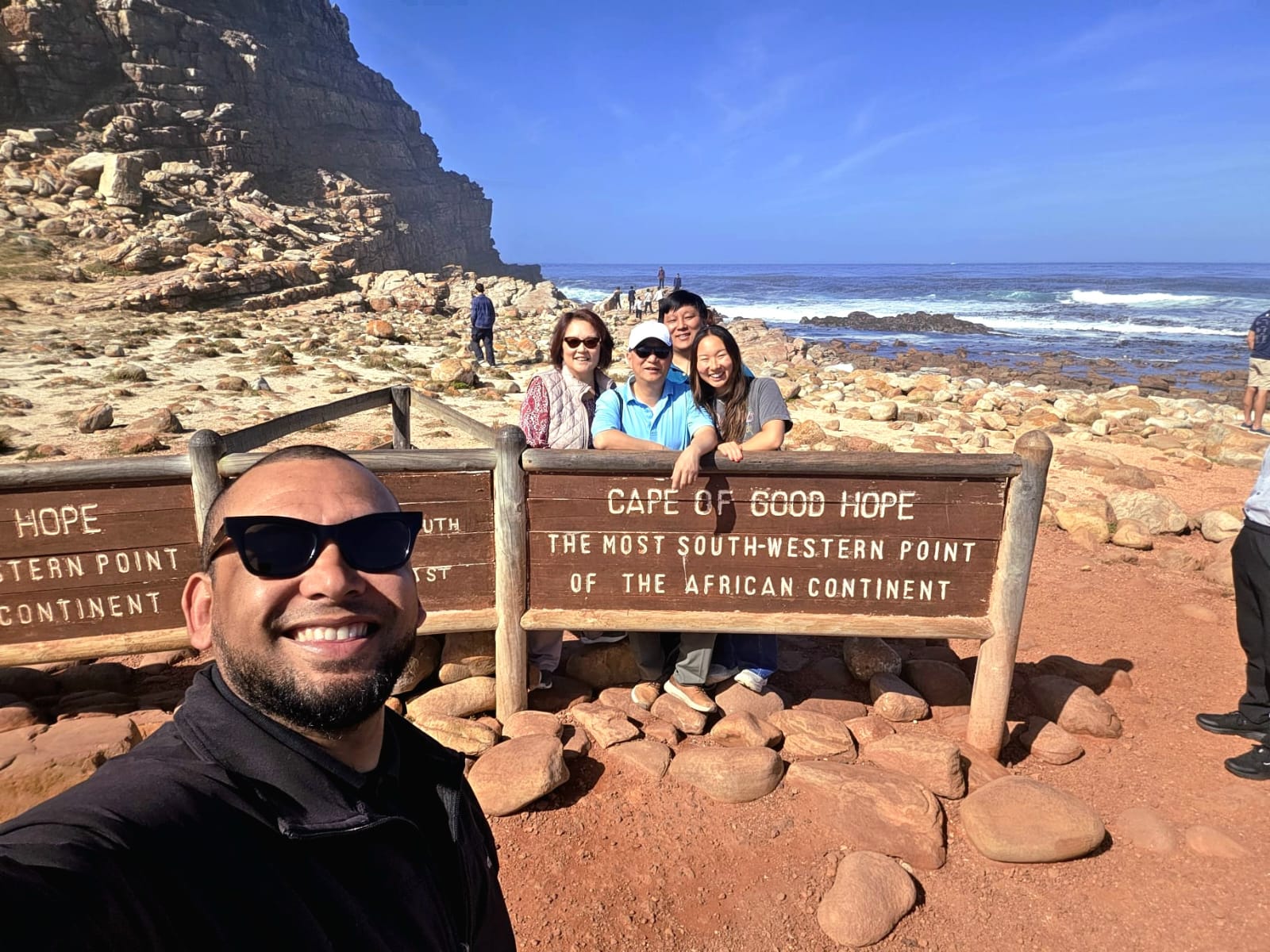
    Wendell and guests at Cape Point on the Cape Peninsula
    Where
    Cape Peninsula
    Allow
    Half to full day
    Good for
    Coastline, fynbos, big skies

    At the tip of the Peninsula, the Cape Point section of Table Mountain National Park is a wild stretch of cliffs, fynbos and empty beaches. From the car park you can reach the old lighthouse viewpoint on foot or by funicular, and the views down the coast are extraordinary. Other trails lead to quieter lookouts and to the signed Cape of Good Hope point.

    One correction worth making early: Cape Point is not the southernmost tip of Africa, which is Cape Agulhas, a long drive east. It is simply one of the most dramatic headlands on the continent. Expect baboons and antelope in the reserve, and keep food out of sight and your distance wide. Swimming is not permitted at Diaz Beach, where the currents are dangerous.

    Practical tip. Wind can be fierce at the top, so bring a jacket. The drive from the city is scenic and slow, so allow a full day if you also want Boulders and a lunch stop.

  3. 03

    Boulders Beach penguins

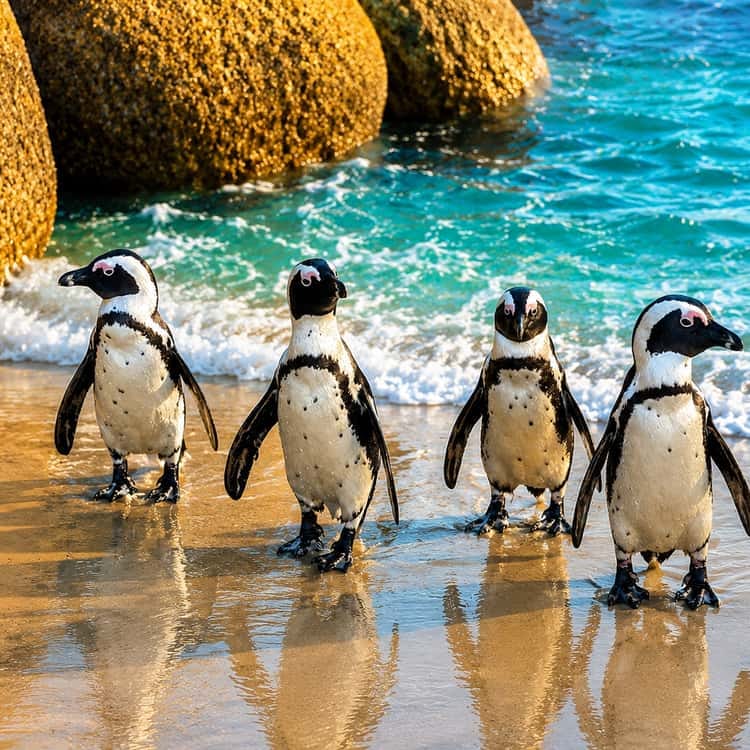
    African penguins resting on the sand at Boulders Beach
    Where
    Simon’s Town
    Allow
    1 to 2 hours
    Good for
    Families, wildlife, photographs

    A protected colony of African penguins lives among the granite boulders and sheltered coves near Simon’s Town. Boardwalks let you watch them waddle, nest, preen and squabble from a respectful distance, and the water in the coves is clear and calm.

    These are wild, endangered birds. Do not touch, feed or chase them, and keep to the boardwalks. Their beaks are sharp and stress affects breeding. Penguins are present all year, though behaviour changes with the moulting and breeding cycle.

    Practical tip. Go early or late to avoid peak crowds. Pair it with a seafront lunch in Simon’s Town on the way to or from Cape Point.

  4. 04

    Bo-Kaap

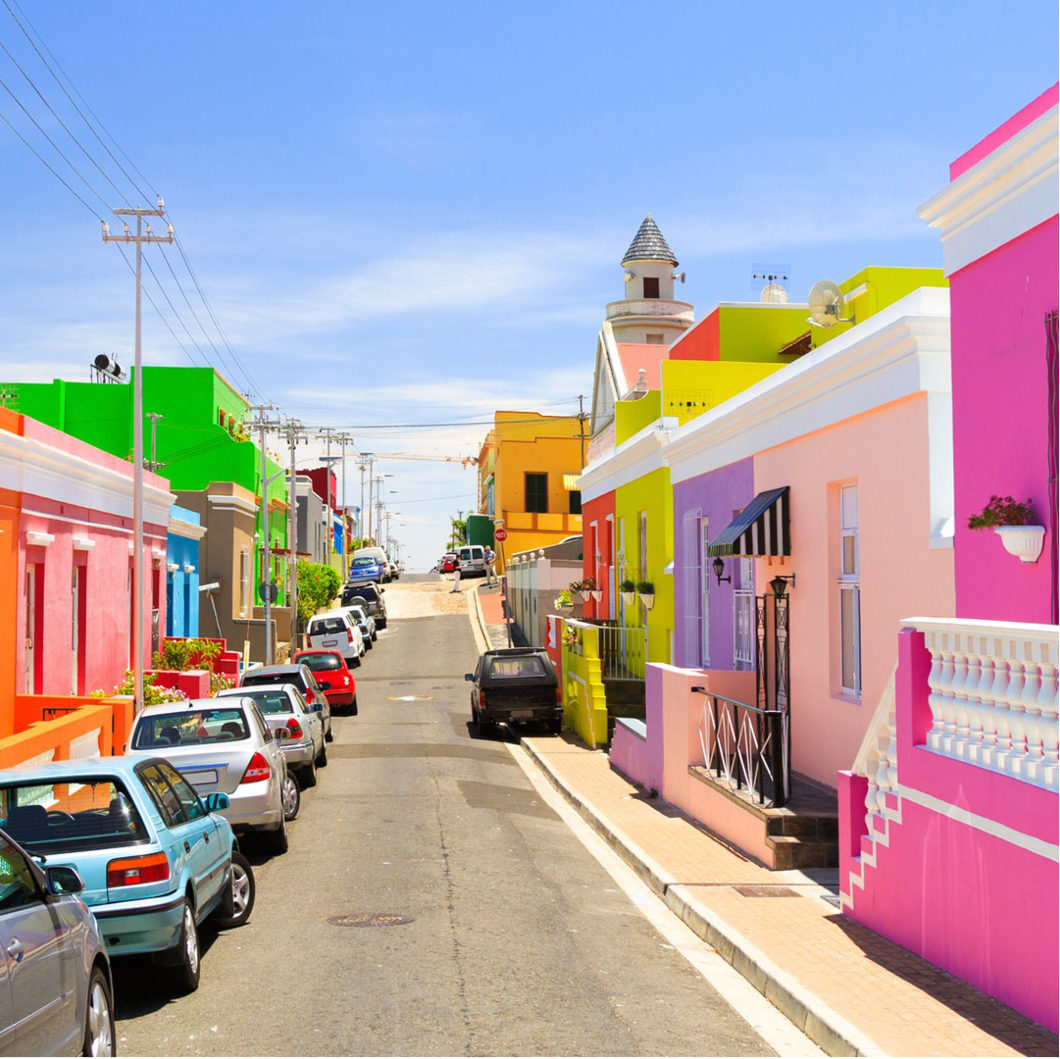
    Colourful houses along a Bo-Kaap street in Cape Town
    Where
    City Bowl, slopes of Signal Hill
    Allow
    1 to 2 hours
    Good for
    History, photography, food

    Bo-Kaap is one of Cape Town’s oldest residential neighbourhoods, known for its cobbled streets and brightly painted houses. It is also a living community with deep Cape Malay roots, mosques whose call to prayer is part of the soundtrack, and a history tied to the people who were brought to the Cape and built much of the city.

    It rewards a slow walk and a bit of context. Be considerate: people live behind those doors, so photograph the streets rather than the residents, keep voices low and ask before taking portraits. Local kitchens and cafes serve Cape Malay dishes such as curries and koesisters, which make a good reason to stop.

    Practical tip. Morning light is soft and the streets are quieter. Dress modestly if you plan to visit any religious or community space.

  5. 05

    Robben Island

    Where
    Table Bay
    Allow
    About 3.5 to 4 hours including the ferry
    Good for
    History, reflection

    Robben Island is a UNESCO World Heritage Site and the place where Nelson Mandela and many other political prisoners were held during the apartheid years. The visit includes a ferry crossing and a guided tour, often led by someone with a personal connection to the prison.

    It is a sober, powerful experience rather than a light attraction, and it is worth giving it unrushed time. Tickets must be booked through the official operator. Sailings depend on weather and sea conditions, and popular dates sell out.

    Practical tip. Book through Robben Island Museum once your dates are fixed, and avoid a tight commitment after the return ferry. High winds can affect both the ferry and the cableway; check each operator separately.

  6. 06

    Kirstenbosch National Botanical Garden

    Where
    Eastern slopes of Table Mountain
    Allow
    2 to 3 hours
    Good for
    Gardens, easy walking, picnics

    Kirstenbosch sits on the eastern slopes of the mountain and is devoted to indigenous South African plants. Wide lawns, shaded forest paths, proteas, and the fynbos that makes this region botanically unique all unfold beneath the mountain’s cliffs.

    The Boomslang canopy walkway curves through the treetops and gives a different perspective on the garden. Paths vary from flat and gentle to steep, so you can tailor the visit to your energy. Summer concerts on the lawn are a local tradition when scheduled.

    Practical tip. Bring a picnic or eat at the garden restaurants, and wear comfortable shoes. It is a good gentle day after a long flight.

  7. 07

    V&A Waterfront

    The Atlantic edge near the V&A Waterfront in Cape Town
    Where
    Cape Town harbour
    Allow
    2 to 3 hours
    Good for
    Dining, shopping, easy evenings

    The V&A Waterfront is a working harbour surrounded by restaurants, shops, galleries and views of Table Mountain. Its pedestrian areas make it an easy first evening, while indoor museums and the aquarium offer options on rainy days. As elsewhere in the city, stay aware of your belongings.

    Seals often lounge near the quayside, buskers play, and the Zeitz MOCAA museum of contemporary African art sits in the historic grain silo. The Robben Island ferry also departs from the Nelson Mandela Gateway here.

    Practical tip. Watch the sunset from the harbour, then book dinner ahead at busy times.

  8. 08

    Chapman’s Peak Drive

    Where
    Hout Bay to Noordhoek
    Allow
    45 minutes of driving, plus stops
    Good for
    Scenic drives, photography

    Chapman’s Peak Drive is a road carved into the cliffs between Hout Bay and Noordhoek, with the mountain above and the Atlantic far below. Pull-outs along the way give you somewhere safe to stop and look.

    The road is a toll road and can be closed at short notice because of rockfall, strong wind or maintenance, so check its status before you plan around it. Having a private driver means you can enjoy the view instead of the bends.

    Practical tip. Late afternoon light is spectacular, with the sun dropping toward the sea. Have an alternative coastal route ready in case of closure.

  9. 09

    Camps Bay and Clifton

    Where
    Atlantic seaboard
    Allow
    1 to 3 hours
    Good for
    Beach time, sundowners

    Camps Bay is the palm-lined beach strip below the Twelve Apostles, with cafes and restaurants facing the sunset. Clifton’s four small beaches, tucked below granite boulders, are a short drive away and are popular with locals.

    The Atlantic here is cold, even in midsummer, so many visitors paddle rather than swim. South-easterly wind can make the beaches unpleasant on some summer days, and the sheltered beach changes with the wind direction.

    Practical tip. Pack sunscreen and a light layer for the evening. Parking is limited at busy times, which is another good argument for a driver.

  10. 10

    Cape Winelands day trip

    Where
    Stellenbosch, Franschhoek, Paarl, outside the city
    Allow
    Full day; allow roughly 1 to 1.5 hours each way, depending on your route and traffic
    Good for
    Food, wine, landscapes

    The Cape Winelands lie inland from Cape Town, outside the city itself, in a valley of old Cape Dutch estates, vineyards and mountain backdrops. Stellenbosch, Franschhoek and Paarl each have their own character, and Constantia, closer to the city, is also a notable wine area with Groot Constantia among its estates.

    A day here is about long lunches and unhurried tastings. Plan two or three stops at most. South Africa has strict drink-driving rules, so a private driver is genuinely the safest way to enjoy it.

    Practical tip. Reserve lunches and popular tastings in advance, particularly in the harvest months from roughly January to March.

Putting it together

Three, four or five days

3 days

The essential first visit

  • Day 1: Table Mountain in the morning if it is clear, then Bo-Kaap and an easy Waterfront dinner.
  • Day 2: Peninsula loop with Boulders Beach, Cape Point and Chapman’s Peak Drive on the way back.
  • Day 3: Winelands day trip, or Kirstenbosch and Camps Bay if you prefer to stay by the sea.

4 days

Add history and breathing room

  • Day 1: Waterfront, Zeitz MOCAA and an early night after the flight.
  • Day 2: Table Mountain and Bo-Kaap.
  • Day 3: Robben Island in the morning, then Camps Bay for sunset.
  • Day 4: Full Peninsula day with Chapman’s Peak, Cape Point and Boulders.

5 days

More time to adapt

  • Day 1: Arrive, Waterfront stroll.
  • Day 2: Kirstenbosch and Bo-Kaap, with Table Mountain if conditions suit.
  • Day 3: Peninsula day.
  • Day 4: Robben Island at your booked time, with room for a weather-delayed mountain visit.
  • Day 5: Choose a Winelands day or keep the day free for activities that shifted.

Treat Table Mountain, Robben Island and Chapman’s Peak as the weather-sensitive items and keep them movable. Swap days freely.

Seasonal context

The seasons run
backwards.

Cape summer is December to February, opposite to the US and UK. The festive season is particularly busy, so plan accommodation and popular attractions ahead. Weather varies in every season.

Summer, December to February

Hot, dry and long-lit, with a strong south-easter wind on many days. This is peak season and the opposite of the US and UK, so book flights, accommodation and popular attractions early. Sunscreen and a hat matter.

Autumn, March to May

Settled weather, quieter crowds and golden light. A very good time for walking, the Winelands harvest and the Peninsula.

Winter, June to August

Cooler and wetter, with storms that sweep the coast and clear, sharp days between them. Cape Town’s rainfall is concentrated here and the mountains turn green. Pack layers and a waterproof, and leave room for indoor activities.

Spring, September to November

Wildflowers appear in the region, the days warm up and the wind builds. A good balance of weather and space.

Questions

Before you book flights

How many days do I need in Cape Town?

Three days covers the highlights. Four or five lets you add Robben Island, Kirstenbosch and a Winelands day without rushing, and gives you a spare day for weather.

What is the best time of year to visit?

Many visitors prefer November to March for beach weather, but March to May and September to November are often calmer and less crowded. It depends on whether you value heat, wildflowers or quiet.

What should I know about safety in Cape Town?

Read current UK or US government travel advice before your trip. Keep valuables out of sight, avoid isolated areas and unfamiliar walks after dark, and use reliable transport. A local host can help with route planning, but cannot remove every risk.

Do I need a visa or special documents?

Entry requirements for US and UK passport holders change, so check the official South African government guidance before you travel, including passport validity and blank page requirements.

Is Table Mountain cableway always open?

No. It depends on wind and cloud and can close at short notice. Keep your schedule flexible and decide on the day.

Can I book Robben Island through you?

Tickets are sold through the official operator, and availability depends on weather and demand. Wendell can plan the rest of your day around your booked sailing.

Are the Winelands in Cape Town?

Stellenbosch, Franschhoek and Paarl lie outside the city and are best treated as a day trip. Constantia is a wine-growing area within Cape Town and offers a closer alternative.

How do I get a quote?

Send your dates, group size and wish list by email or WhatsApp. Wendell replies personally with availability and a quote. No prices are published on this website.

Want these ten
made into your days?

Send dates and group size. Wendell replies personally, with a quote by direct enquiry only.

Enquire with Wendell
Chat on WhatsAppMessage Wendell